

Highlighting impactful, policy-relevant research from GIMPA researchers
Michael Danquah, Bazoumana Ouattara, Williams Ohemeng & Alfred Barimah
Urbanization, climate change, and labour productivity in Accra, Ghana
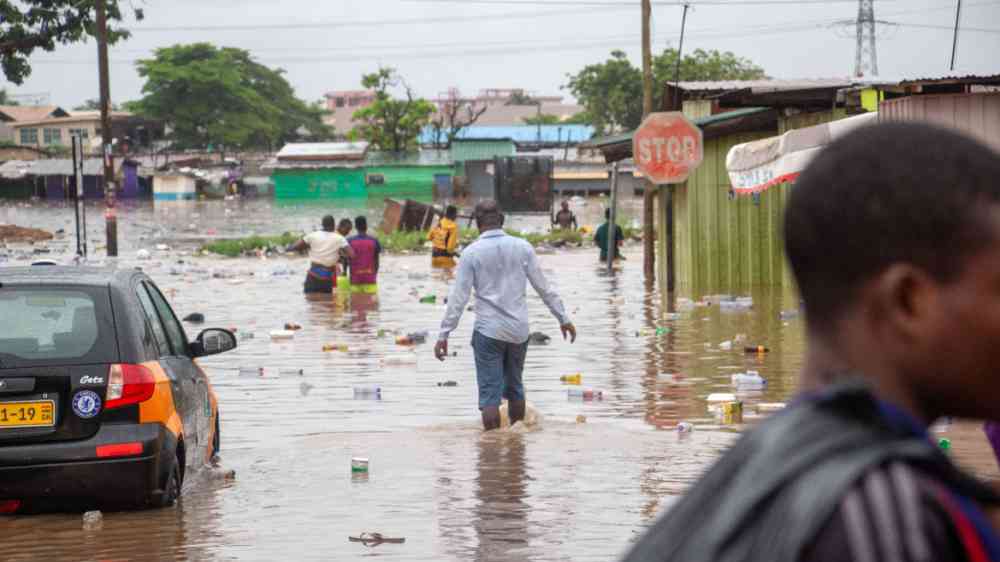
This study examines how climate variability affects labour productivity across municipalities in the Accra city region. We combine enterprise-level data from Ghana’s Integrated Business and Establishment Survey (IBES I and II), climate data at the sub-city level from the Ghana Meteorological Agency, satellite and reanalysis data, and key informant interviews with representatives of enterprises, city authorities, and the National Disaster Management Organization (NADMO). The findings show that rainfall, which contributes substantially to vulnerability and risk in the city, significantly reduces labour productivity, while temperature has no statistically significant effect. This reflects the disruptive impacts of rainstorms and floods on firms and the growth of high-productivity sectors. These results highlight the critical importance of integrating climate resilience into urban planning strategies and economic development policies. Strengthening investment
in adaptation and resilient infrastructure will be essential for building more livable, sustainable, and economically dynamic African cities.

Masud Ibrahim, Coffie Emmanuel, Dora Yeboah, & Aaron Kumah.
The influence of digital technologies on quality service delivery in the public sector: the mediating role of service expectation
Public service quality remains a problem for people in Ghana who use government ministries, departments, and agencies daily. This study assessed the impact of digital technologies on service delivery and quality in Ghana’s public sector. The study used a causal research design with a quantitative approach. The sample size was 384 respondents who mostly patronized the public institutions considered for the study. SPSS was used to analyze the data with descriptive statistics, correlation analysis, regression analysis, and ANOVA to investigate the relationships among measured variables. A mediation analysis was conducted to assess whether service expectation mediates the relationship between the adoption of digital technology and service delivery and quality. Findings revealed a significant positive relationship between digital technology adoption and service quality and delivery. Service expectations also had a moderately significant positive influence on service quality and delivery, and significantly mediated the relationship between technology adoption and service quality. These findings underscore the importance of service expectation as a key mechanism through which digital technology improves public service
outcomes. Customers who patronize most public sector institutions should be provided with sustainable, high-quality digital experiences through the maintenance of digital infrastructure, including dependable internet connectivity and accessible digital platforms, and should be given top priority by the management.

William Phanuel Kofi Darbi, Stanford Nartey, Charles Agyei, & Stanley Coffie
Research and publication practices of business school faculty in Ghana: a social practice perspective
This paper seeks to explore the challenges and post-surgery integration needs among rural women living with obstetric fistula. A critical exploratory research methodology based on phenomenology was used to conduct in-depth one on-one interviews. A systematic analysis of data was then done to identify and categorize emerging themes. Published in Women and Birth, the results showed that those who lived with obstetric fistulae experienced psychosocial, physical, and economic challenges. Dominant among the psychological challenges identified were disruptions in social
relations, divorce and loss of a baby through neonatal death.
Physical challenges include rashes and sores, foot drop, and incontinence of urine. Economically, these women lost their source of livelihood and were heavily dependent on other family members. Support from family was also found to be key to the post-surgery integration of the women.

Theresa Mannah Blankson, Fafanyo Asiseh,Sarah Serwah Boateng & Mawuenyega Makafui Butu
Adoption Patterns and Impact of Digital Technologies Among Ghanaian Market Women
The study investigates the determinants of digital technology adoption and its impact on labor productivity for businesses operating in the informal sector of the Ghanaian market economy, focusing on gender disparities. We apply rigorous estimation techniques to address our research questions using a unique dataset generated from the 2022 World Bank Informal Sector Enterprise Survey. Our results demonstrate a broad inclination toward using digital technology for business. However, a gender disparity is evident: 68% for female-led businesses versus 74% for male-led. Factors such as asset ownership, education level, business location, and other firm attributes significantly influence digital technology adoption among these businesses. The implications of these adoption rates on labor productivity were profound. The analysis highlights a robust surge in productivity with the adoption of digital technology. Overall, labor productivity surged by 88% with digital adoption, with female-owned businesses experiencing a 107% increase. The findings stress the need for tailored policy interventions, including educational reforms that promote digital proficiency and e-commerce customization for the informal sector.

Raphael Aryee, Ebenezer Adaku, Atia Alpha Alfa, Sarah Quayson, Evelyn Quartey & Michael Nana Amoakoh
The role of organisational citizenship behaviour and green human resource management in the relationship between circular economy practices and firm performance
The benefits of circular economy (CE) practices to firms cannot be over emphasized in business environments and have thus attracted research attention lately. Nevertheless, there exist considerable unexplored gaps regarding how green human resource management (GHRM) and organisational citizenship behaviour (OCB) partially or jointly influence the relationship between CE practices and firm performance (FP) in developing economies.
Using planned behaviour and natural resource-based view (NRBV) theories, this study explores the roles of GHRM and OCB in the relationship between CE practices and FP [i.e. environmental performance (EP) and financial performance (FnP)]. The study employed a quantitative (survey) approach, specifically using partial least squares structural equation modelling (PLS-SEM) technique to analyse data randomly collected from 196 manufacturing firms in Ghana. The study found that GHRM moderates the relationship between CE practices and OCB. Additionally, OCB mediates the relationship between CE practices and EP but does not mediate the relationship between CE practices and FnP. The study provides empirical evidence and highlights the significance of GRHM and OCB in driving successful CE initiatives in organisations, leading to better FP. The findings of this study provide useful insights to support green operations in firms and policy development, particularly in developing economies.

Emmanuel S. Adabor, Patrick Adu & Daniel Adomako Asamoah
BamClassifier: a machine learning method for assessing iron deficiency
Iron deficiency (ID) is a well-known cause of anemia and could lead to adverse clinical and functional impairments. However, ID is underdiagnosed due to non-specific symptoms, difficulties in interpreting ambiguous assessment outcomes, and suboptimal sensitivities of methods in some circumstances. This study presents Bam Classifier, a machine learning method for the assessment of ID. This method proceeds by repeated selection of samples of instances from routine complete blood count data in such a way that each observation is included in exactly one sample. Then, a median-supplement machine learning model is built from each sample, and the performance of the model on test instances is aggregated into a bag of predictions from which ID statuses are assigned to samples by way of the highest frequency counts. We show the effectiveness of our method by applying it to real datasets obtained from different investigations in Ghana and simulated data as well. Our method obtained a perfect area under the receiver operating characteristic curve in all experiments and significantly outperformed other well-established methods in terms of accuracy, sensitivity, specificity, precision, and diagnostic odds ratio in all our evaluations. A successful application of the method will permit the study of large collections of samples for ID assessments, save time and cost using complete blood count parameters, while standardizing the interpretation of outcomes of such investigations.

Akwasi Adom-Dankwa, Francis Atsu, Emmanuel Numapau Gyamfi, Godfred Amewu & Kenneth Ofori-Boateng
Sovereign bond yield and cryptocurrency returns within the frontier West African monetary zone: a dynamic contagion analysis
This study employs wavelet analysis to examine the contagion between cryptocurrency returns and sovereign bond yields within the West African Monetary Zone (WAMZ) economies, capturing both the frequency-dependent nature of the relationship and time-varying behavior. We analyze daily data spanning 01/26/2021 to 10/07/2022, with a total observable value of 444. The study selected periods of uncertainty within financial markets, namely, the COVID-19 pandemic and the Russia–Ukraine war, because there was a need to understand how securities react during such times to help investors plan accordingly. Our results show a negative correlation between sovereign bond yields and cryptocurrency returns, suggesting that investors can use these asset classes as hedge agents, diversifiers, and safe-haven instruments. These findings provide valuable insights for investors and policymakers, shedding light on the potential interdependencies and diversification benefits between these two asset classes.
Mohammed Armah, Ebenezer Bugri Anarfo, Emmanuel Numapau Gyamfi & Godfred Amewu
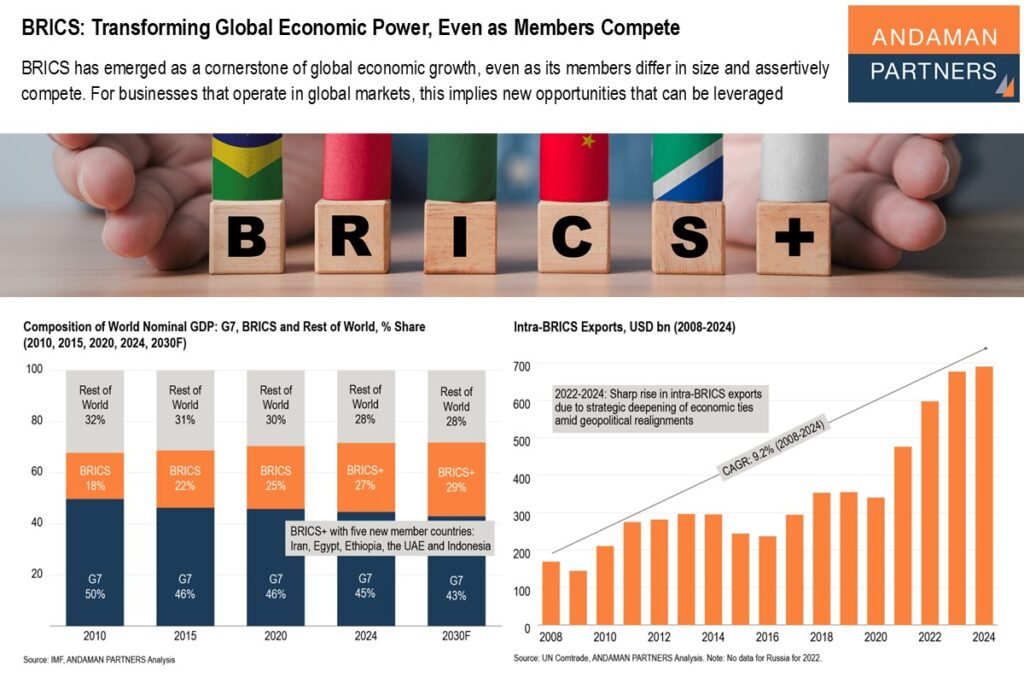
Does financial market stress matter in renewable energy investment? Empirical evidence from BRICS economies
Policymakers in BRICS economies face several financial risks in increasing their level of investment in renewable energy. This is because investment in renewable energy is crucial in light of climate change. Although numerous studies have investigated the factors driving renewable energy, little is known about how market stress affects renewable energy. This
study explores the critical question that has emerged in the financial literature over the past few decades, namely, the role of financial stress in promoting renewable energy investment.
To this end, we employ bivariate and multivariate quantileon- quantile and wavelet coherence to investigate the effect of financial market stress on renewable energy investment covering the period from 1998 to 2021. Our results show that financial stress adversely affects renewable energy investment during an extreme economic downturn. This implies that when the market is under stress, funding for renewable energy becomes much harder to secure due to systemic risk. These findings highlight the importance of financial stability for accelerating renewable energy adoption. To sustain renewable growth, BRICS economies need resilient financial policies, such as green financing mechanisms, credit support for renewable firms, and investment-friendly regulations. Ensuring financial stability can help attract long-term capital, making renewable energy a more viable and scalable solution for the future.
Fanny Adams Quagrainie, Akosua Mawuse, Amankwah & Ama Abankwa Dankwa
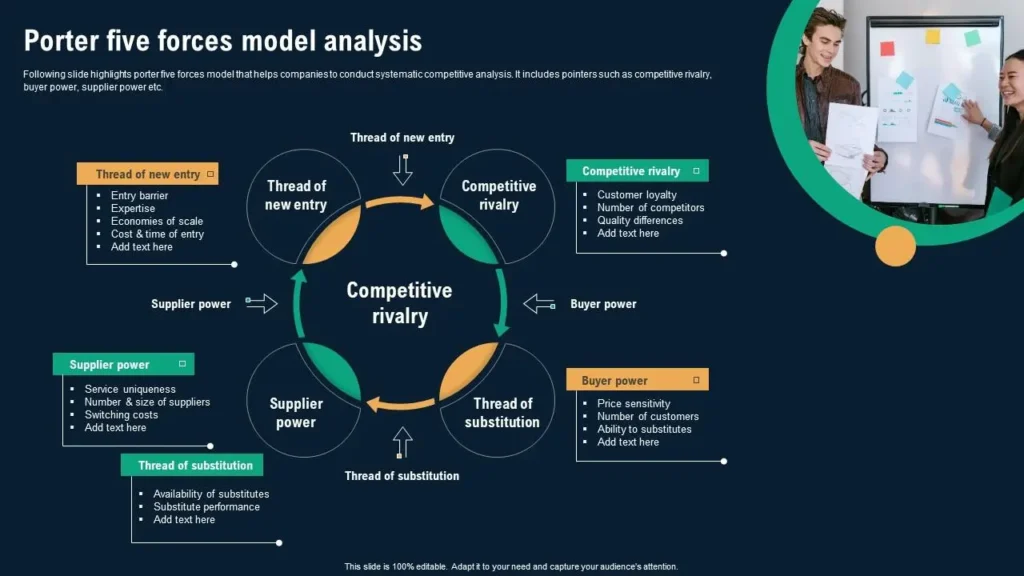
The Competitive Situation of the Ghanaian Ethnic Fashion Industry Using Porter’s Five Forces Competitive Model
The fashion industry is an innovative professional field operating in an increasingly competitive, regulated environment. This makes strategic issues very vital for their success. The purpose of this study is to provide a profile of ethnic fashion designers (EFDs) as well as establish the
competitive context of Ghanaian EFDs using and validating the extent to which Porter’s five forces framework applies to the Ghanaian context. Employing a qualitative approach, the study utilized a cross-sectional design to gather data from a sample of 33 EFDs operating in Accra and Tema. The results highlight the personal and business profiles of EFDs. It also revealed that highly competitive forces in the ethnic fashion industry are barriers to entry, bargaining power of buyers, and entrepreneurial personal resources. While the bargaining power of suppliers and competitive rivalry are moderate forces, threats of substitutes are low. The revelation of entrepreneurial personal resources as a possible competitive force for EFDs underlies the importance of the resources an entrepreneur has and the social capital that can be obtained. This study is one of the few papers that attempt to study the competitive situation of the Ghanaian ethnic fashion industry using Porter’s five forces model. It therefore presents a novel framework for understanding the competitive situation of EFDs, offering insights into the nature of how Porter’s five forces apply to a developing economy

Felicia Engmann, Kofi Sarpong Adu-Manu, Jamal-Deen Abdulai & Ferdinand Apietu Katsriku
Optimizing Packet Size for Enhanced Performance in Wireless Sensor Networks for Environmental Monitoring Applications
Wireless sensor networks (WSNs) are widely used in environmental monitoring applications (EMAs) for water quality, air quality, and structural health monitoring. However, the performance of WSNs in EMAs depends on various network parameters such as packet size, data rate, and bit error rate. Packet size affects network reliability, which is evident in performance metrics, such as energy consumption, delay, and throughput. In this study, we investigated a method used to measure the effect of packet size on the performance of an IEEE 802.11 network in typical EMAs. The NS-3 network simulator compares the packet sizes (32, 64, 128, 512, and 1024 bytes) for different network densities (100, 120, 140, 160, 180, and 200 nodes, respectively) in a 100 × 100 m square area. This paper provides a comprehensive performance analysis of WSN applications for different node densities for performance metrics such as energy consumption, latency, and packet delivery ratios. The study also found intermediate packet sizes of 64 and 128 bytes, proving improved network performance for the chosen performance metrics. The results were validated against results from related studies on WSN implementation in smart grids and other underwater communications. We report that the optimum average end to- end delay achieved in our simulations was 10.88 s for the 128-byte packet size, whereas the optimum packet delivery ratio was 0.178 for the 64-byte channel. The remaining energy on the channel was 27.9% for 64 bytes, which is better than other channels with 25% energy remaining.

Kingsley S. Agomor
The Twist and Turns of the Media in Generating and Reporting Evidential Parliamentary Proceedings in Ghana
The paper examines why and how the media report evidence on parliamentary proceedings and the challenges they face. Qualitative data was collected through in-depth interviews with journalists, Members of Parliament, and Civil Society. With a total of 25 interviews through thematic analysis, the paper found that the desire to make credible stories, resolve controversies on political issues, and draw attention to societal problems for possible redress were the key factors that motivate the media to search for and report issues on parliamentary work. The study identified three potential sources of evidence generation from Parliament: committee sittings, plenary, and parliamentary documents. The findings also showed that the media do not have direct access to committee sittings, which happen to be the “strong room” of Parliament, where relevant information and facts could be generated and communicated to inform citizens’ decisions. Therefore, the media resort to other peripheral information, which could be “diluted.” Also, the lack of capacity on technical matters tends to constrain the media in effectively reporting on parliamentary work. It is recommended that the Standing Orders of Parliament should be reviewed to allow media access to all committee sittings.

Francis Clottey Odonkor & Stephen T. Odonkor
Ghanaian farmers’ perspectives on pesticides: Balancing use and environmental sustainability
Pesticide use in agriculture is critical for pest management but poses significant health and environmental challenges, particularly in low- and middle-income countries. This study explores Ghanaian vegetable farmers’ perspectives on pesticide use, health implications, and environmental sustainability. Using survey data from 1484 farmers, the research examined demographic profiles, farming practices, pesticide management behaviours, and associated attitudes. The findings reveal that most respondents are rural dwelling, middle-aged males with primary or junior high school education. Carrots and cabbage are the most cultivated crops, with most farmers having over a decade of experience. Although 75.9 % of farmers reported using suitable pesticides, 70 % acknowledged the negative health effects of pesticide use, citing harm and toxicity as primary concerns. Improper disposal practices, such as burning containers (56.9 %) and pouring rinse water onto farms (69.1 %), were prevalent, raising environmental sustainability concerns. A significant association between owning personal protective equipment (PPE) and its usage (p = 0.000) highlights the importance of access to safety measures in mitigating health risks. However, limited awareness of health implications (50.5 %) and reliance on pesticides as a default pest control strategy underscore the need for targeted education. The study emphasizes the urgency of promoting sustainable practices through integrated pest management (IPM), policy reforms, and community-based education. By addressing knowledge gaps and encouraging safer pesticide use, this research contributes to improving health outcomes and environmental sustainability in Ghana’s agricultural sector. These findings provide a foundation for future interventions aimed at balancing productivity and ecological stewardship in smallholder farming communities.
Gamel Abdul- Nasser Salifu
Synergies and trade-offs of sustainable agricultural practices for improved food security in a developing country: a systematic review
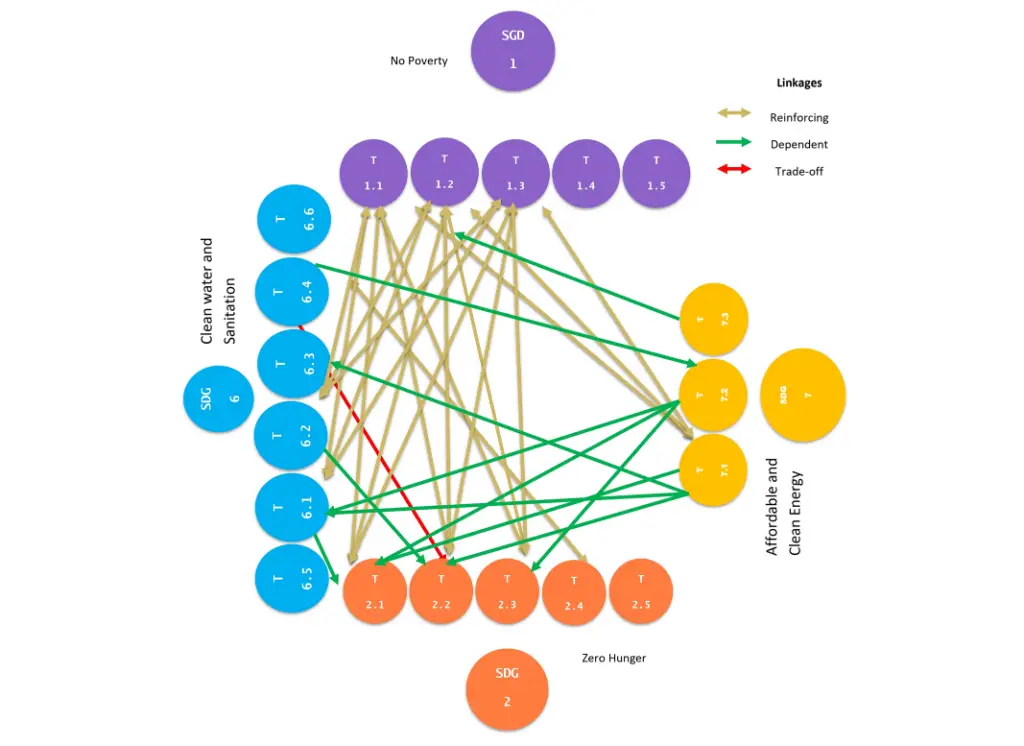
New approaches are needed to anchor a deeper understanding of the synergies between agriculture, the economy, and the environment in the post-pandemic era. However, there is still little research on the empirical contribution of agriculture to sustainable development goals (SDGs). Drawing on studies published in different geographic contexts, the paper demonstrates how the transformative power of agricultural synergies can be mobilized to achieve the SDGs. From an initial review of 1000 articles in scientific databases, 120 studies met the selection criteria. The studies were selected based on results of a screening tool. The analysis revealed that six principal research fields are relevant for understanding the drivers of sustainable agriculture. These areas include; efficiency of land use practices (25%), climate adaptation in agriculture (18%), land use changes (29%), farmer behavior and decisions (11%), peri-urban and urban farming (11%), and land policy (3%). These areas were directly or indirectly related to all the SDGs. Seven out of the 17 SDGs showed the greatest synergy with agriculture, while SDG 7 (affordable clean energy) exhibited a trade-off. Contributions made here have wide applicability for mobilizing and implementation of SDGs in emerging economies, where the agricultural sector represents more than 60% of employment.