

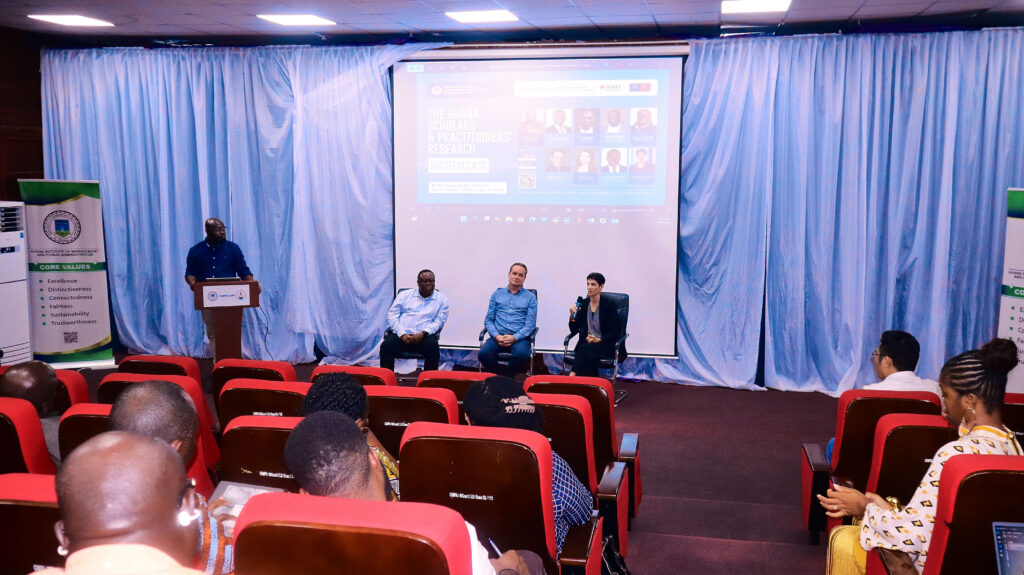
The future of national development belongs to societies that generate knowledge rather than merely consume it. This message resonated throughout the Ghana Scholars and Practitioners’ Research Masterclass, a high-level international programme that brought together academics, policymakers, industry leaders, doctoral researchers and development practitioners to explore how research can drive innovation, inform policy and transform lives.
Hosted at the Greenhill Campus of the Ghana Institute of Management and Public Administration (GIMPA), the Masterclass provided a platform for learning, collaboration and the exchange of ideas among researchers and practitioners from Ghana and beyond. Through presentations, panel discussions and practical workshops, participants gained valuable insights into grant writing, implementation research, causal inference, research translation and natural resource governance while building partnerships aimed at strengthening Ghana’s research ecosystem and contributing to sustainable development.
The programme reflects GIMPA’s commitment to advancing research excellence, promoting interdisciplinary collaboration and positioning itself as a leading centre for knowledge creation, innovation and policy-relevant scholarship.
Advancing Research for Policy and Practice
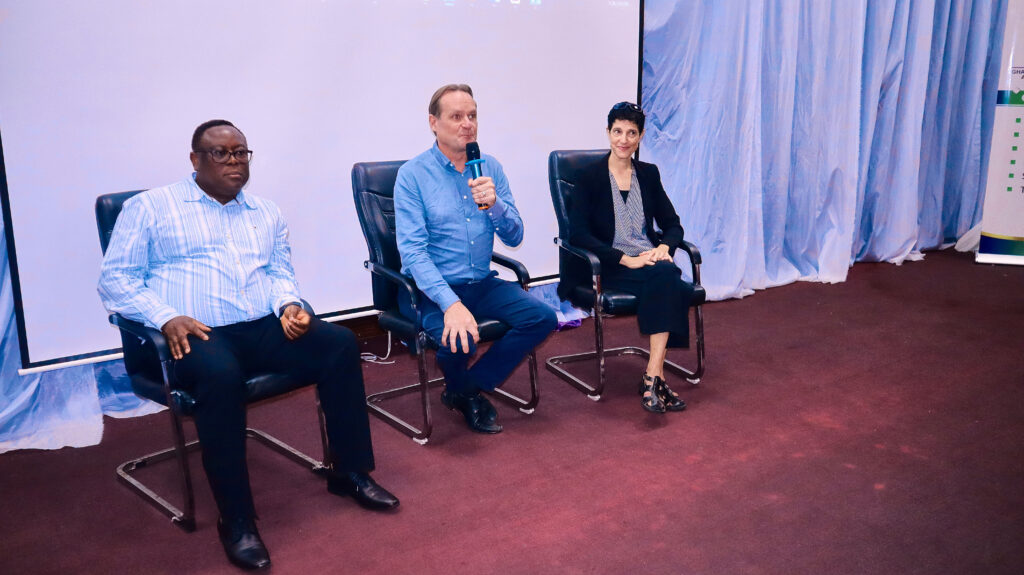
Setting the tone for the programme, the Deputy Rector of GIMPA, Professor Ebenezer Adaku, welcomed participants on behalf of the Rector, Professor Samuel Kwaku Bonsu, and underscored the transformative role of research in addressing contemporary development challenges.
“This gathering brings together great minds united by a common conviction; that rigorous research remains one of the most powerful instruments for solving society’s most pressing challenges and shaping a more prosperous future for Ghana, Africa and our global community,” he stated.
Professor Adaku noted that rapid technological advancement, climate change, economic transformation and complex social challenges have made evidence-based decision-making more important than ever. He emphasized that research has moved beyond the boundaries of academia to become a critical driver of innovation, sound governance, competitiveness and sustainable development.
“Every policy that improves lives, every technological breakthrough that transforms industries, every business model that creates sustainable value and every public intervention that changes communities begins with a thoughtful question, a rigorous investigation and credible evidence,” he said. He explained that the Masterclass was designed not only to strengthen research skills but also to cultivate a culture of excellence in knowledge creation by encouraging critical thinking, methodological rigour, strategic publication and meaningful collaboration between academia and industry. Professor Adaku encouraged participants to approach the sessions with curiosity, challenge assumptions, engage in constructive discussions, build lasting professional networks and embrace collaboration as a key ingredient for impactful research.
Strengthening International Research Collaboration.
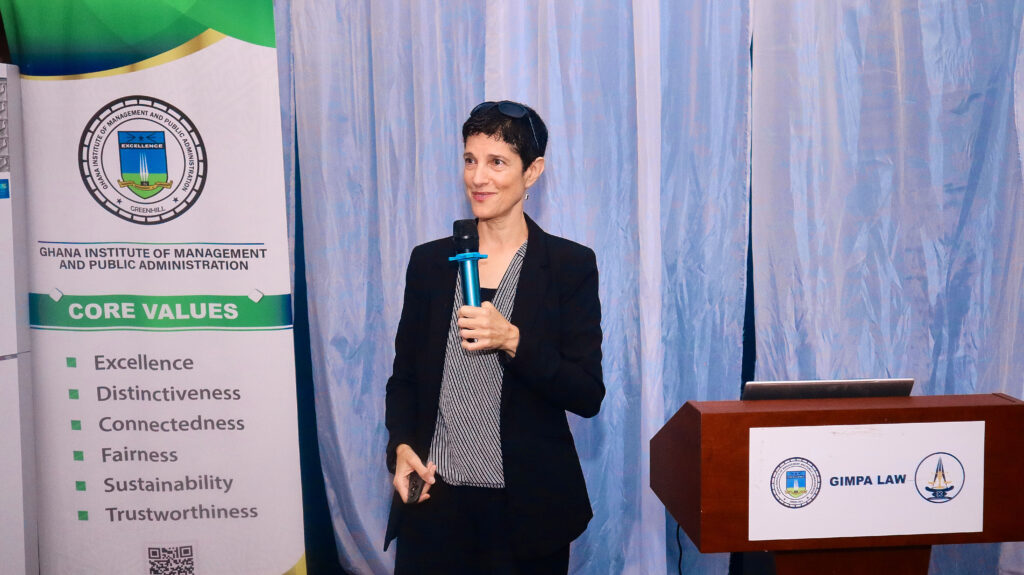
The opening session featured remarks by Amelia Edwards, who highlighted Australia’s higher education strengths and the growing opportunities for collaboration between Australian and Ghanaian institutions.
Drawing attention to Australia’s globally recognised universities, innovation ecosystem and contributions to research and technology, she emphasized the importance of partnerships in addressing shared development challenges and building future-ready workforces.
“Strong evidence, monitoring, learning and evaluation are critical to demonstrating impact, attracting support and improving outcomes for the communities we serve,” she noted.
Using examples from health and development initiatives, including support for Ghana’s HPV vaccination programme and assistive communication projects, she demonstrated how research, evaluation and international collaboration can improve programme effectiveness and strengthen long-term impact.
Building Capacity for Competitive Grant Acquisition.
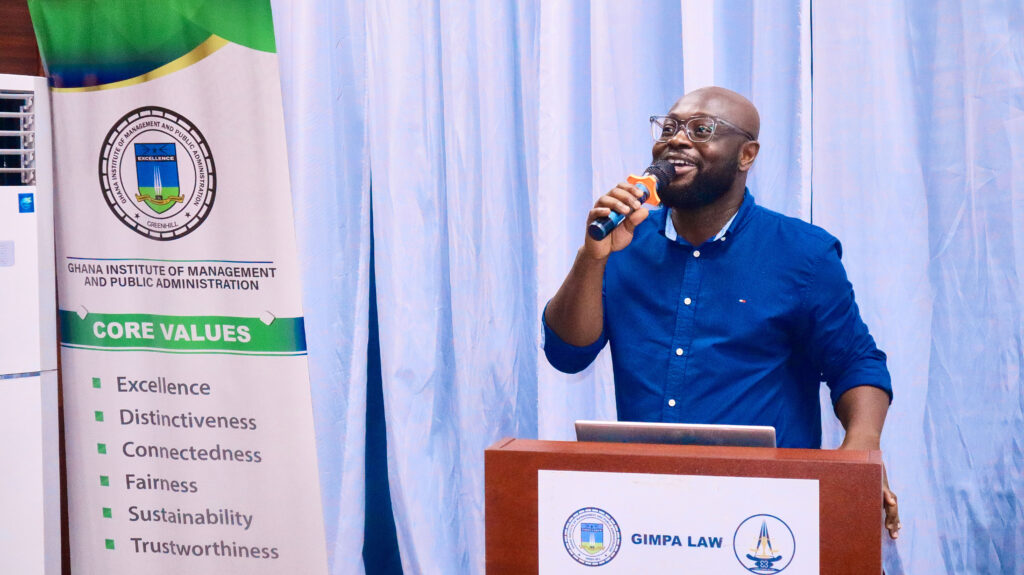
A key feature of the Masterclass was an engaging session on grant writing facilitated by Professor Simon Feeney, a distinguished development economist and internationally recognised research grant leader.
Professor Feeney provided participants with practical guidance on navigating the competitive research funding landscape, emphasizing that successful grant applications require more than innovative ideas.
“Successful grant applications are not built on good ideas alone; they demonstrate a clear problem, measurable impact, value for money and a credible team capable of delivering results,” he explained. Participants explored the priorities of major funding organisations, strategies for identifying suitable funding opportunities and approaches for developing proposals that align with funder expectations.
Professor Feeney encouraged researchers to build strong multidisciplinary teams, seek feedback, refine proposals continuously and view rejection as part of the research development process.
Advancing Implementation Research for Sustainable Impact.
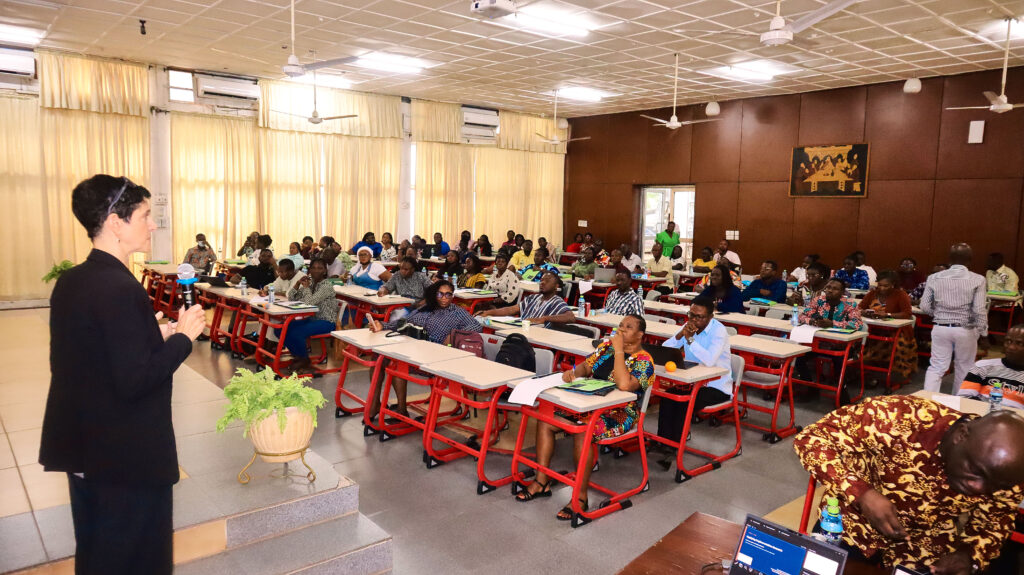
Participants were introduced to the principles and practical application of implementation research through an interactive session focused on how evidence-based interventions can be effectively delivered, scaled and sustained in real-world settings.
The facilitator explained that implementation research examines how interventions can be delivered reliably, equitably, sustainably and at scale, distinguishing it from efficacy and effectiveness studies.
Participants were introduced to internationally recognised frameworks, such as the Consolidated Framework for Implementation Research (CFIR) and the RE-AIM framework, which help researchers identify implementation barriers, evaluate outcomes, and improve program sustainability.
Using Ghana’s HPV vaccination programme as a case study, the session demonstrated how strategic planning, community engagement, targeted communication and stakeholder involvement contribute to successful public interventions.
Participants were encouraged to prioritize community ownership, capacity building and sustainability throughout the research process.
Understanding Causal Inference and Evidence-Based Decision-Making
Another major session was led by Professor Sefa Checho, who explored the principles of causal inference and its importance in generating evidence capable of informing policy and practice. Through practical examples and discussions, Professor Checho distinguished between association and causation, highlighting the need for researchers to carefully examine evidence before drawing conclusions. “Association does not necessarily imply causation. Good policy decisions require evidence that can explain not only what is happening, but why it is happening,” he stated.
Participants examined key concepts including counterfactual reasoning, confounding, selection bias and time-varying influences, gaining insights into methods that strengthen causal claims and improve research quality.
DAY TWO: EXPLORING EXTRACTIVE SECTOR GOVERNANCE AND NATURAL RESOURCE MANAGEMENT
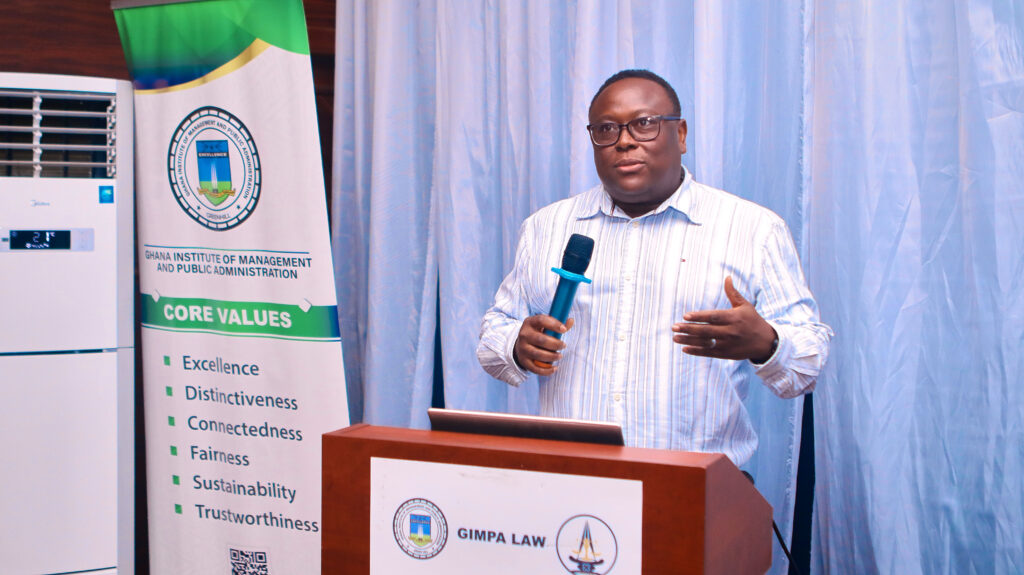
The Masterclass continued with a focus on natural resource governance and extractive sector management, challenging participants to critically examine Ghana’s resource landscape and the role of research in shaping effective policies.
Opening the session, Professor Ebenezer Adaku encouraged participants to continue questioning assumptions, engaging with diverse perspectives and developing professional relationships that extend beyond the Masterclass.
The day’s session was facilitated by Mr. Patrick Stephenson, Country Manager for Ghana at the Natural Resource Governance Institute (NRGI), who delivered an insightful presentation on Ghana’s extractive industry and the importance of evidence-based research in strengthening governance.
Drawing from his expertise in fiscal governance, economic policy and natural resource management, Mr. Stephenson guided participants through the processes involved in mineral extraction and the importance of maximizing value from Ghana’s natural resources.
He explained the concept of mineral value addition, highlighting how local processing can increase economic benefits, create employment opportunities and contribute to industrial growth. Participants also gained practical insights into mineral royalties, including how revenues generated from the extractive sector are structured and intended to support national development and host communities. Discussions focused on the legal and financial frameworks guiding royalty arrangements, as well as the challenges associated with transparency, accountability and effective resource management. A key highlight of the session was Mr. Stephenson’s explanation of negotiations between governments and extractive companies before mining operations begin. He outlined the importance of discussions around fiscal terms, environmental responsibilities, community development commitments and regulatory compliance.
He emphasized that governments must negotiate agreements that protect national interests while creating an enabling environment for responsible investment.
The session reinforced the central theme of the Masterclass — “Doing Research for Policy and Practice” — by demonstrating how rigorous research can influence decision-making and strengthen governance in strategic sectors such as mining.
Panel Discussion on Ethics, Inclusion and Sustainability
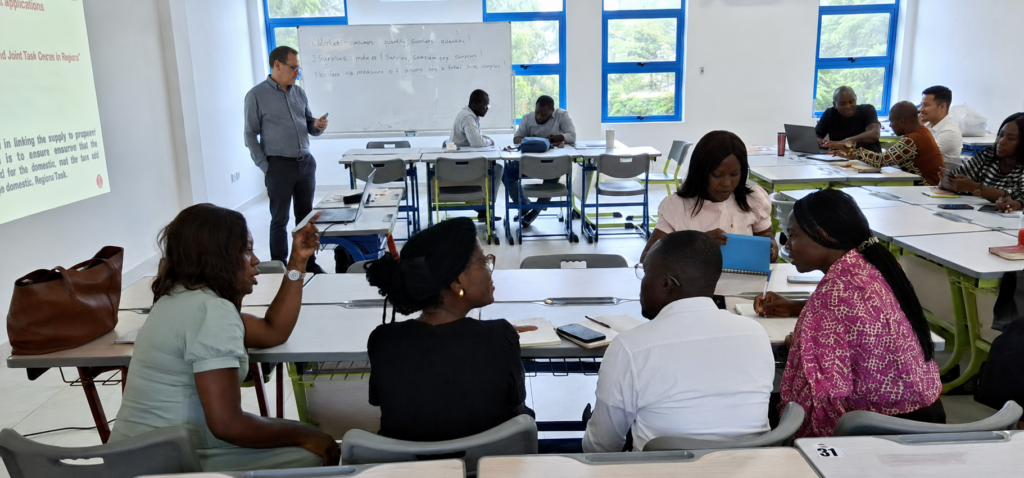
An engaging panel discussion brought together facilitators and participants to explore practical issues surrounding research implementation, publication, ethics, collaboration and grant management.
Discussions highlighted the importance of interdisciplinary teams, gender and international diversity, mentorship for early-career researchers and transparency in research partnerships and authorship.
Panelists emphasized that sustainability must be considered from the beginning of research design rather than treated as an afterthought.
Participants were encouraged to incorporate community ownership, institutional capacity building, skills transfer and clear scale-up strategies into research proposals to ensure long-term impact.
Reinforcing GIMPA’s Commitment to Research Excellence.
The Ghana Scholars and Practitioners’ Research Masterclass continues to demonstrate the importance of research that extends beyond academic publication to create meaningful impact in society.
By bringing together scholars, practitioners, policymakers, industry leaders and international experts, the programme has created a platform for collaboration, mentorship and knowledge exchange.
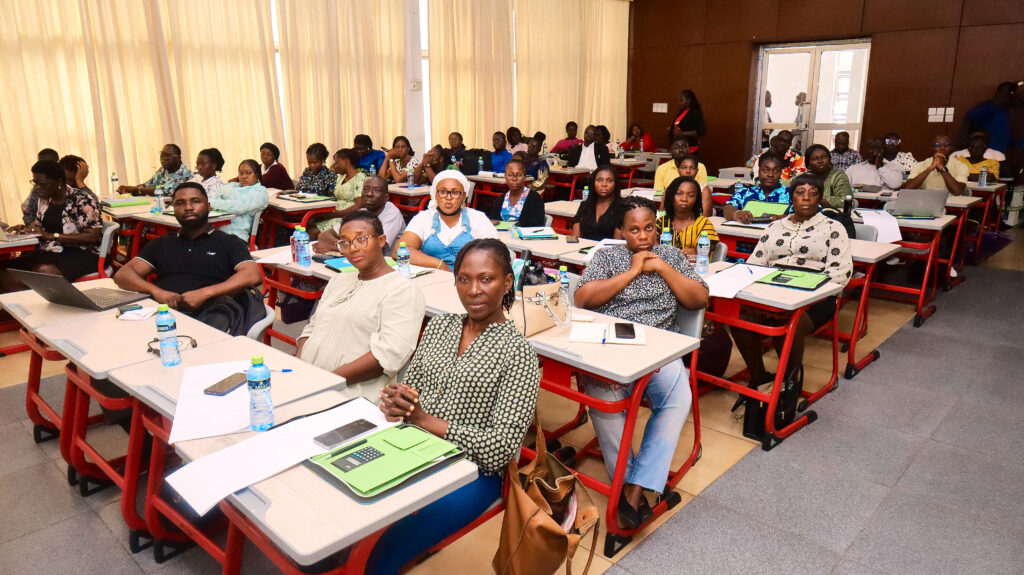
The Masterclass reflects GIMPA’s strategic commitment to strengthening research capacity, expanding international partnerships and equipping researchers with the skills and networks needed to address complex development challenges.
As participants continue engaging in the programme, the central message remains clear: societies that invest in research, innovation and evidence-based decision-making are better positioned to achieve sustainable development and long-term prosperity.
Through initiatives such as the Ghana Scholars and Practitioners’ Research Masterclass, GIMPA continues to strengthen its role as a hub for transformative scholarship, policy engagement and research-driven development in Ghana, Africa and beyond.
